
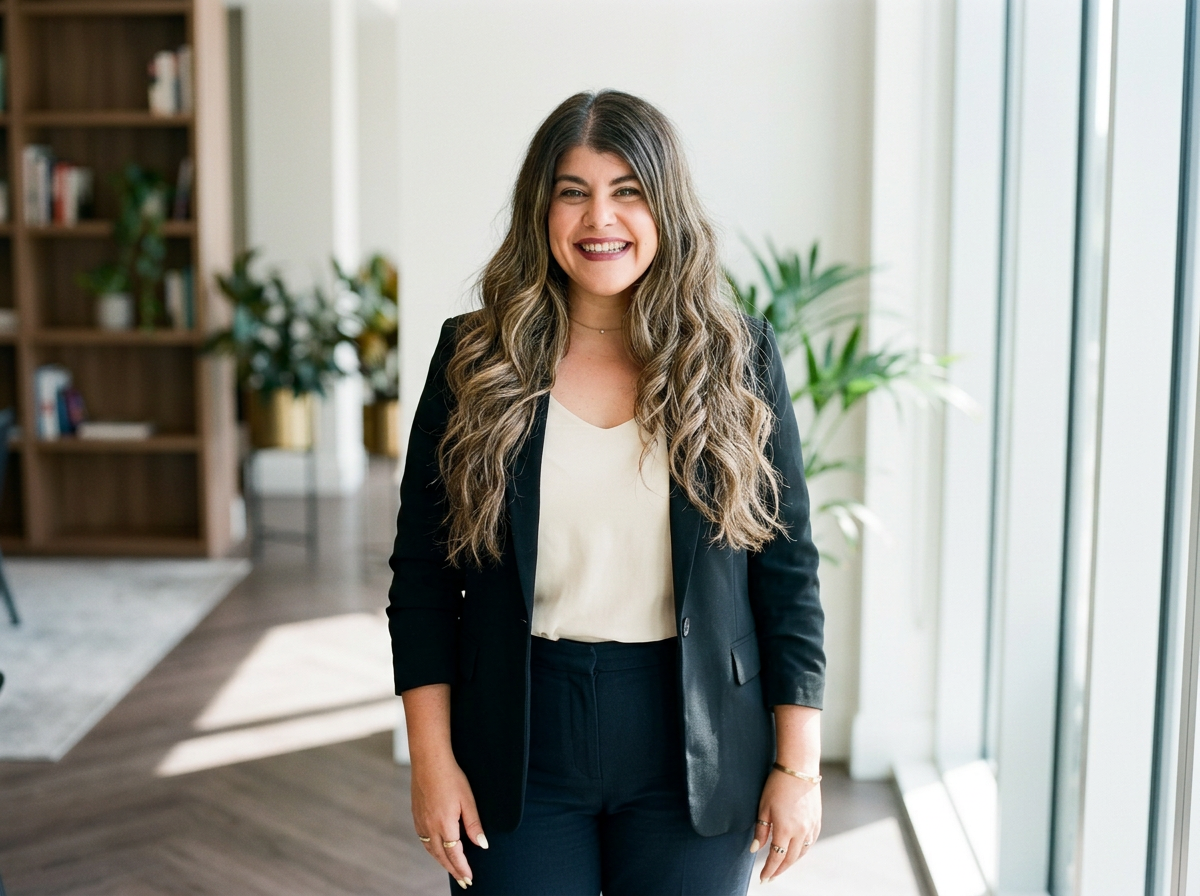
AboutHi, I’m Dr. Stella.
I’m a clinical and health psychologist at SickKids and the founder of Whole Kids Health. I help the adults around children turn what we know about kids’ mental and physical health into what they do on Monday morning.
10+ years
In clinical practice with children, teens and families
Hospital and community
Clinical and health psychologist in both settings
Whole Kids Health
Founder and Director
My story
I came to psychology the long way.
Montreal
Where it started
Concordia
BA (Hons), Psychology
York University
MA and PhD, Clinical Developmental Psychology
Hospital
Residency and postdoctoral fellowship in health psychology
Whole Kids Health
Founded the clinic
Dr. Stella
Training and professional education
01 · Chapter one
The long way
I had never been more sure of anything.
I grew up in Montreal, the first in my family to go to university.
After high school I went straight to work. By 22 I had been offered a management job in the public sector: permanent, secure, with a pension. It was a great offer, the kind many people would take without a second thought. But for some reason it didn’t feel quite right.
That same weekend I was in Boston. I wandered onto the grounds of Harvard with no real plan. Walking through that campus, watching students head to class, I knew. I wanted to be back in school. I wanted to study psychology. It was the scarier path, the less secure one. I had never been more sure of anything.
So I came home and turned down the management job. At 23, I registered in psychology at Concordia. I spent my days in the classroom and my evenings at work, supporting myself through school.
In my final year, I wrote my honours thesis on why some people are left with bitterness after a setback and others with regret. It came down to who we blame. When the university radio station asked me to come on air to explain it, it was absolutely terrifying. It was also absolutely exhilarating.
For the first time, my research became something anyone could carry home and use. That’s when I understood:
Knowing something is only half of it. The other half is giving it away.
02 · Chapter two
The hospital
Who in the community can hold that intersection of physical and mental health?
Studying people’s experiences wasn’t enough. I wanted to help people through them. That took me to York’s Clinical Developmental Psychology program, where I completed my master’s and PhD.
I trained as a clinician-scientist. I’m curious about why things happen and what’s going on underneath. Then I carry that understanding through to the people it’s meant to help.
The last milestone on the way to “Dr.” was residency. It came with a new chapter: building a life with room for both work and family. I needed a place that fit my professional goals and still got me to daycare pickup by 5 p.m. I was fortunate to land a residency spot at The Hospital for Sick Children.
My first rotation had me everywhere: dialysis, burn recovery, inpatient units, families taking in a diagnosis that would change their lives.
Two questions stayed with me.
The first: why was I only discovering this area of psychology at the very end of my doctoral training?
The second came from watching how hospital care works. It’s time-limited by design. So where do kids and families go after discharge? Who in the community can hold that intersection of physical and mental health?
03 · Chapter three
Why I teach
Your path doesn’t have to be smooth. It just has to be yours.
The second question became Whole Kids Health. The first is why I teach.
For seven years, most of my teaching was for other clinicians. Over time it widened to everyone around the child: educators, camp staff, parents and healthcare teams. These adults do some of the most meaningful work there is. It also takes a real toll. I know that from the inside. So I support them in the work itself and in sustaining themselves while they do it.
How I teach
Take what fits. Leave what doesn’t. Make it yours.
01
Knowing is not living
Along the way I found that knowing something is not the same as living it. Change is easy. Maintenance is the hard part.
02
Something to take home
Every talk comes with a handout and every workshop with a workbook, made to be used on Monday morning, when the session is over and the real work starts.
03
One small shift
I ask people to commit to one small shift they can make today. The overhaul they’re planning for tomorrow can wait.
CredentialsTrained in hospital. Still practising.
Get in touch
Book Dr. Stella
Share a little about your group and what you’re hoping for. You’ll hear back to set up a 15-minute call, followed by a proposal.
Book Dr. StellaQuestions
How far ahead should we book?
Two to three months ahead gives you the best choice of dates. Shorter timelines are often possible, so if your date is sooner, get in touch.
What does it cost?
Fees are flat and set by format. Workbooks are quoted separately. Travel within Toronto and Halton Region is included. You’ll receive the full rate card after the call.
How many people can attend?
Talks work for groups of any size, from a parent evening to a full staff of 150 or more. Workshops work best for up to about 25 people.
Are sessions recorded?
No. Sessions are delivered live, so groups can talk openly.
Can sessions be online?
Yes. Dr. Stella hosts sessions on Zoom for Healthcare. Your organization shares the link with participants.
Do you travel?
Yes. Travel within Toronto and Halton Region is included. Beyond that, travel and accommodation are quoted separately. Dr. Stella is open to engagements across Canada and internationally.
What if we’re not sure what we need?
That’s often the best starting point. On the call, Dr. Stella will ask what you’ve noticed or what you want your team to take away. She’ll shape the session from there.